
The Problem of Linux Modernity
In an era where Microsoft is digging deep into the Linux kernel and systemd is trying to become the single point of failure for the entire OS, I found myself looking for an exit.
I didn’t want a server OS that felt like a corporate product. I wanted something that stayed true to the Unix philosophy: Do one thing, do it well, and stay out of my way.
That is why I chose Alpine Linux.
Its speed is really remarkable, it installs in a couple of minutes and idles at ~100MB of RAM out of the box. But the reason I trust it with my infrastructure isn’t just because it’s small and lean. It’s because it is hardened by default.
Here is the technical deep dive into why Alpine is the “Special Forces” of Linux distributions.
The Philosophy: Security Through Minimalism
Most distributions (like Ubuntu or Redhat) are “general purpose.” They come pre-loaded with everything you might need, just in case. In the security world, we call that “Attack Surface”.
Alpine takes the opposite approach. On its standard installation, it gives you nothing but the kernel and a few tools. If you want something, you add it.
This isn’t just about saving disk space. It’s about removing the code that hackers exploit. You cannot hack a vulnerability in a library that isn’t there.
The Spec-Ops Loadout: Active Combat Systems
When people hear hardened kernel, they assume it’s complex configuration. With Alpine, the security is baked into how the software is compiled.
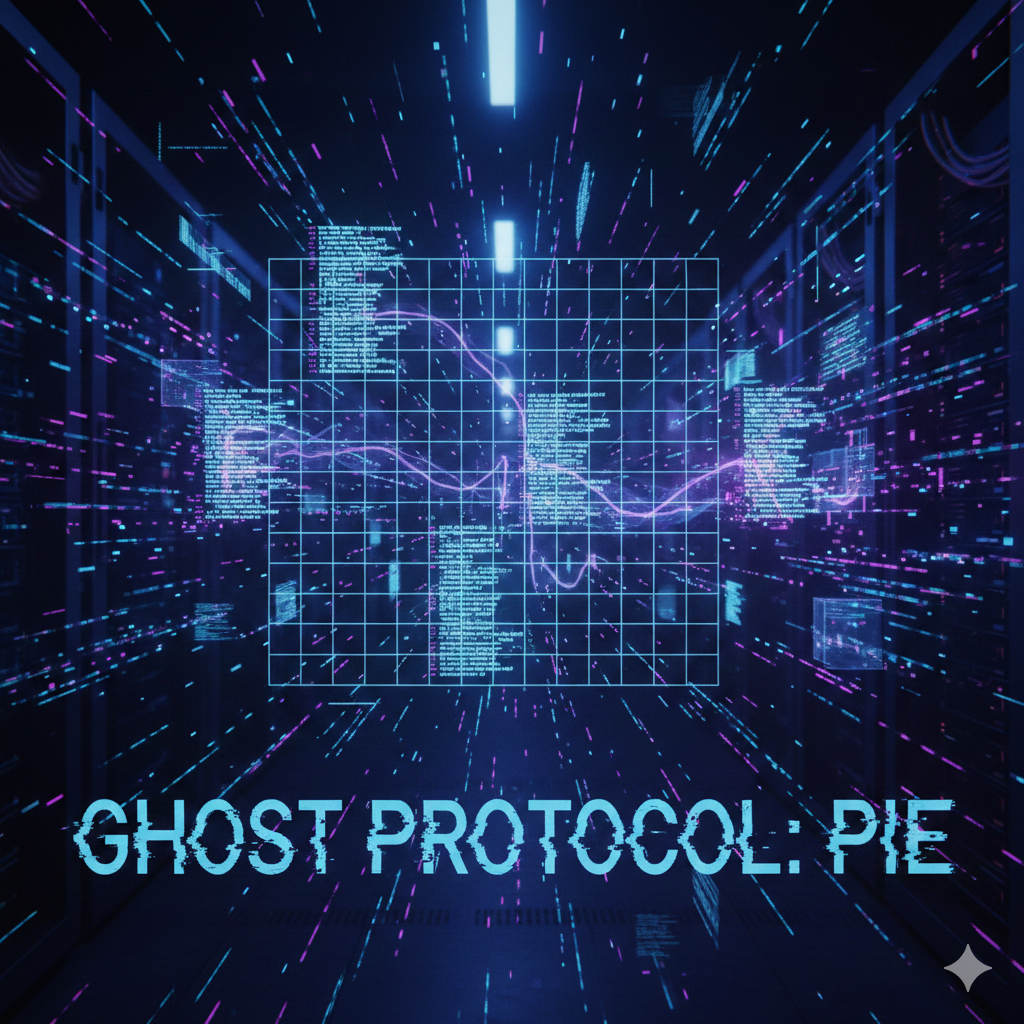
Ghost Protocol: Position Independent Executables (PIE)
In many traditional systems, server programs load into the same, predictable spot in the computer’s memory every time they run.
Think of it like parking your car in the same Spot at the mall every single day. If a thief knows your car is always there, they know exactly where to go to break in.
Alpine compiles every single package as a Position Independent Executable (PIE). This means the OS forces the program to load into a randomized memory location every time it starts.
The Tactical Advantage: Even if an attacker finds a weakness in your software, they can’t predict where that weakness is located in memory. You can’t snipe a target that teleports every time it spawns. PIE scrambles the coordinates so the enemy is always firing at ghosts.
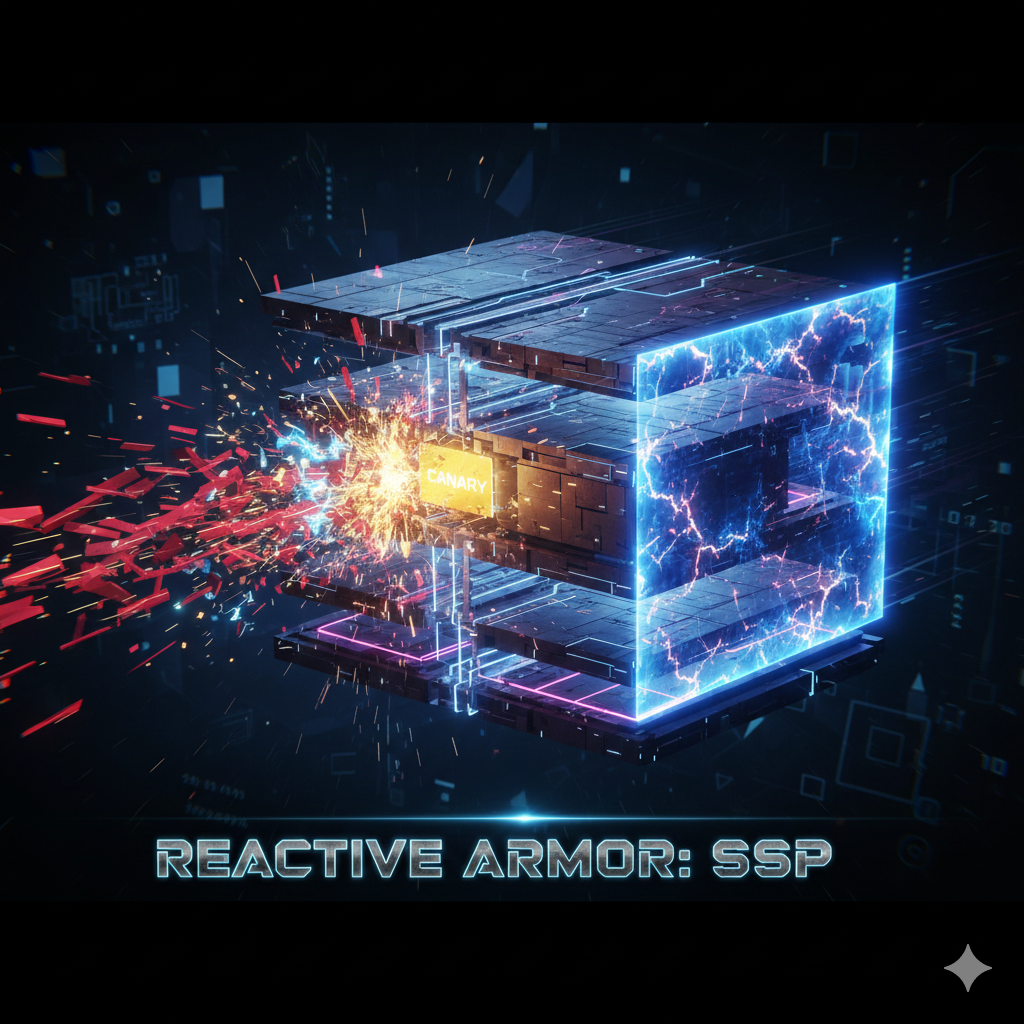
Reactive Armor: Stack Smashing Protection (SSP)
A classic hacker trick is the “buffer overflow”. Imagine trying to pour a gallon of water into a pint glass—it overflows and spills onto the table. In a computer, hackers try to “overflow” a program’s memory stack to overwrite critical instructions and inject their own malicious code.
Alpine compiles binaries with Stack Smashing Protection (SSP). Think of this as a digital “tripwire” or a “canary” placed right next to the critical data in memory.
The Tactical Advantage: If an attacker tries to overflow the buffer, they inevitably hit the canary first. The program detects the tripwire has been disturbed and immediately shuts down before the malicious code can execute. It prefers to crash safely rather than run compromised code.
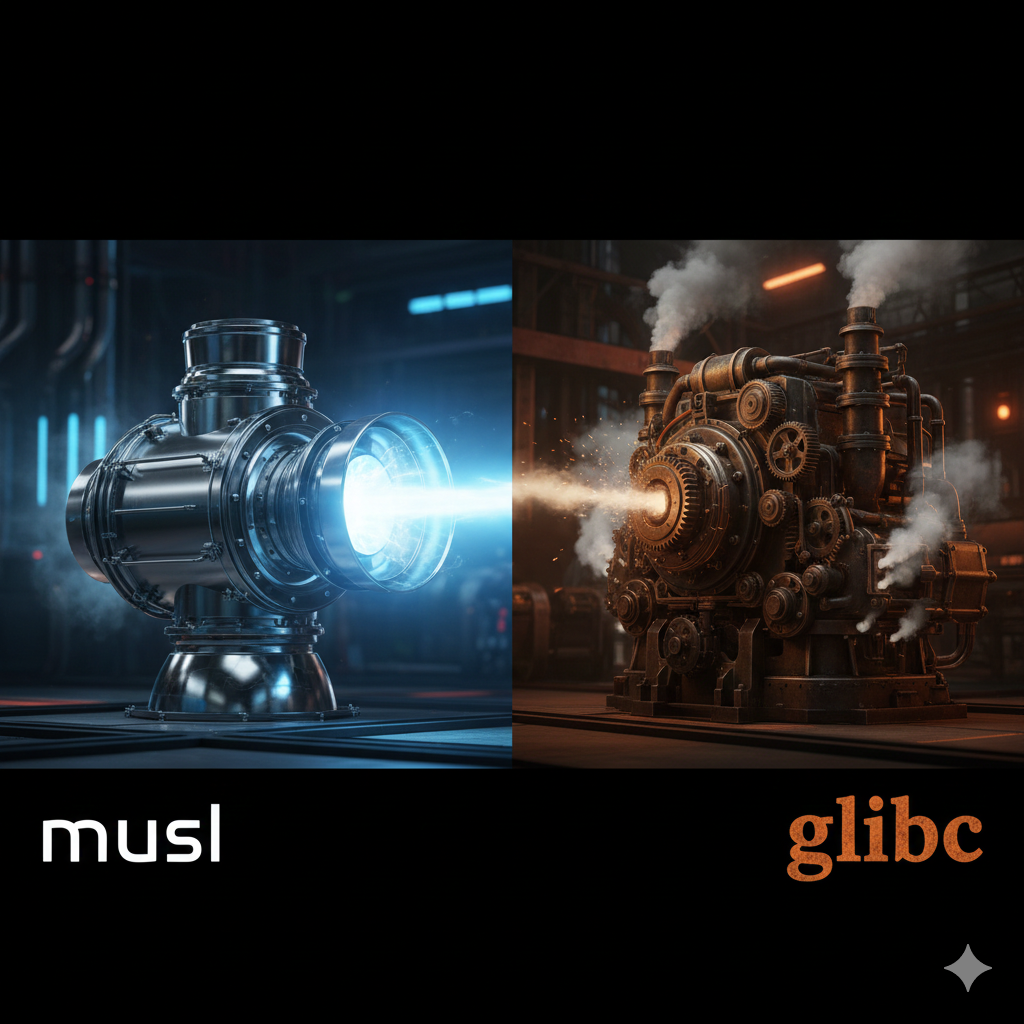
The Lean Engine: musl libc vs. glibc
This is the controversial part, but it is the secret to Alpine’s efficiency.
Most Linux distros use glibc (GNU C Library). It is the “Swiss Army Knife” of libraries, huge, compatible with everything, but bloated with decades of legacy code.
Alpine uses musl libc.
- The Difference:
muslis written from scratch. It prioritizes clean code, standards compliance, and static linking. - The Benefit: Because the code base is smaller, there are fewer places for bugs to hide. It is easier to audit and faster to execute.
The Static Linking Advantage
Because musl is so efficient, it is fantastic for Static Linking. This is a game-changer for my setup (and for anyone running Go/Rust applications). You can compile your application with all its libraries bundled inside.
- No “Dependency Hell”: You don’t need to worry if the server has the right library version.
- Tiny Containers: This is why Alpine Docker images are 5MB, while Ubuntu images are 30MB+.
While Alpine Linux’s musl libc is leaner, more standards-compliant than glibc, and ideal for lightweight setups, it’s not universal and has trade-offs: musl lacks glibc’s aggressive optimizations (e.g., AVX/SIMD assembly), slowing compute-intensive tasks.
In high-concurrency, memory-intensive apps, musl’s allocator can cause lock contention and slowdowns (e.g., 6x in PHP-FPM, 10-20% in Redis).
For Python data science (NumPy, Pandas, AI/ML), compiles could be 10-50x longer on Alpine with unoptimized results.
Node.js can also be up to 15% slower in string tasks.
JUST KNOW, TEST AND UNDERSTAND YOUR USE CASE
If you are running Go/Rust binaries, or a static site, Alpine is King. If you are running a legacy monolithic PHP app with 500 concurrent threads, you might need the raw, messy speed of glibc
Regaining Control: OpenRC

I have made my stance on systemd clear: I don’t like it; its not for me. It tries to do too much, logging, network, mounting, timers. It violates the Unix philosophy of “do one thing well”.
Alpine uses OpenRC.
- It is a classic, dependency-based init system.
- It uses simple shell scripts for configuration.
- It is transparent. You can read the script and know exactly what your service is doing on boot.
For a server, this simplicity and predictability is exactly what I want.
I choose the KISS principle over monolithic complexity every time. Alpine Linux fully aligns with that.
Summary: The Sovereign Choice
I use Alpine because it respects my resources and my intelligence.
- It saves money: I can run a high-traffic site on a low-end VPS or a very cheap dedicated server because the OS takes zero overhead.
- It saves time: The
apkpackage manager is blindingly fast. Updates and upgrades take seconds. - It sleeps securely: With PIE and SSP on by default, the baseline security is higher than a standard Ubuntu install out of the box.
If you are looking to build a sovereign infrastructure, whether it’s a Bitcoin node, a personal CDN, or a website, Alpine is the foundation I recommend.
Harder to hack. Lighter to run. Impossible to kill.
I will be updating this page with any extra findings and information I discover.
Frequently Asked Questions
Why is Alpine Linux better for servers than Ubuntu or Debian?
In my experience, Alpine Linux is often preferable because of its extreme minimalism. It removes “bloat” by default, meaning there is less code to manage and fewer vulnerabilities to exploit. Out of the box, it idles at just ~100MB of RAM and provides only the bare essentials. This allows you to build your stack from the ground up, rather than stripping it down, making it ideal for low-cost VPS, dedicated servers and high-performance containers.
Is Alpine Linux secure enough for production environments?
Yes. Alpine Linux is designed with Security by Default. Unlike many other distributions, it compiles all user-space binaries as Position Independent Executables (PIE) with Stack Smashing Protection (SSP). This prevents entire classes of zero-day exploits (like buffer overflows) from executing, making it arguably more secure out-of-the-box than a default mainstream distro install.
Does Alpine Linux use systemd?
No, Alpine Linux does not use systemd. It uses OpenRC, a simple and dependency-based init system. This is a major reason why I and many other professionals choose it. It adheres to the Unix philosophy of doing one thing well, rather than managing the entire OS through a single monolithic daemon.
Can I run Docker containers on Alpine Linux?
Absolutely. Alpine Linux is actually the industry standard base image for Docker containers because of its small size (often under 5MB). Running Docker on top of Alpine is also highly efficient, as the host OS consumes negligible resources, leaving more CPU and RAM for your actual applications.
What is the difference between glibc and musl in Alpine?
Alpine Linux uses musl libc instead of the more common glibc found in mainstream and enterprise distros like Ubuntu or Redhat. Musl is designed to be lightweight, fast, and standard-compliant. While this makes Alpine faster and smaller, it means some proprietary software compiled for glibc may not run out of the box without compatibility layers (like gcompat).
Fuel the Stack
Keep the nodes running and the coffee brewing. If you got value from this post, consider supporting the stack.